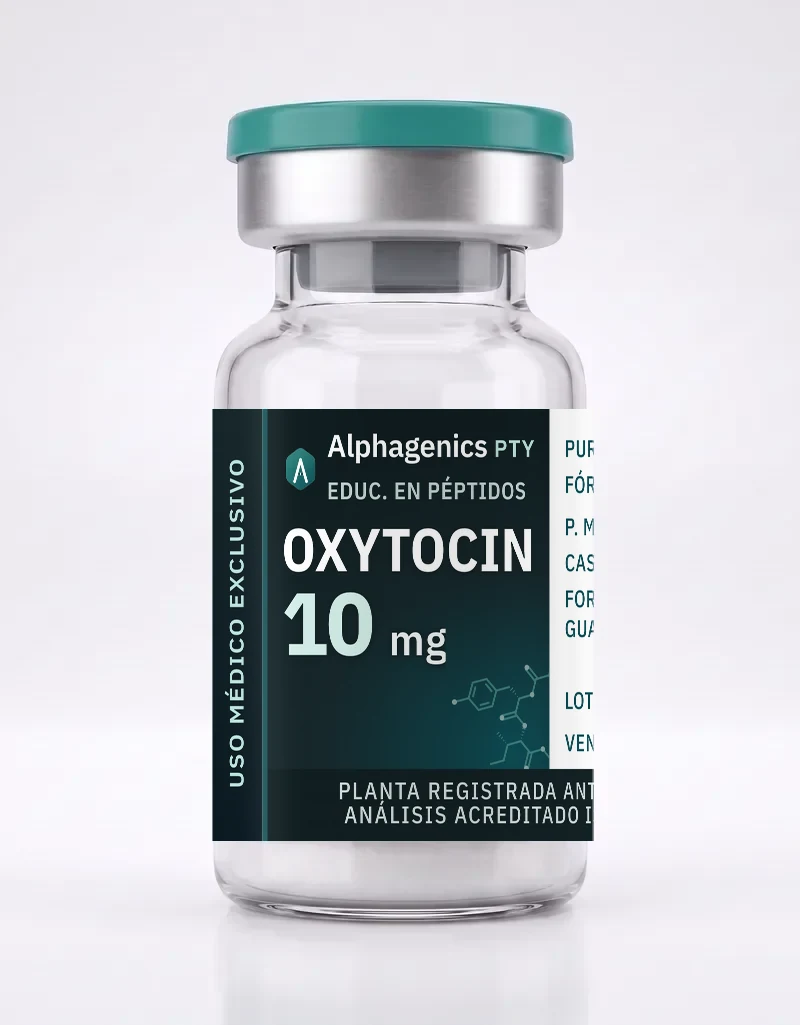
Oxytocin
Hypothalamic nonapeptide, oxytocin receptor agonist
About Oxytocin
Oxytocin is a cyclic nonapeptide synthesized in the supraoptic and paraventricular nuclei of the hypothalamus and released by the posterior pituitary.
It contains a disulfide bridge between cysteines 1 and 6. It is a WHO essential medicine because of its role in labor and in the prevention of postpartum hemorrhage, and it is also the subject of research for its roles in social behavior, bonding, the stress response and the regulation of appetite.
Quick guide · 5 key points
Oxytocin: from childbirth to behavior
Oxytocin is a hypothalamic hormone with an established medical use in obstetrics and a broad line of research on social behavior and appetite. Here are five things the research shows.
-
1
A hypothalamic hormone with its own receptor
Oxytocin is made mainly in the paraventricular and supraoptic nuclei of the hypothalamus and released from the posterior pituitary. It acts on the oxytocin receptor (OXTR), a G protein-coupled receptor. Its classic actions are uterine contraction during labor and milk ejection.1
OXTRG protein-coupled receptor that signals through Gq -
2
An established obstetric drug with a very short action
Synthetic oxytocin is FDA-approved to induce labor when medically indicated and to control postpartum bleeding, and it is part of WHO's recommendations on uterotonics. Its plasma half-life is 1 to 6 minutes; after an intramuscular dose, the uterine response starts within 3 to 5 minutes.2,3
1–6 minPlasma half-life, per the FDA label -
3
Stress and trust: mixed results
In 37 healthy men under psychosocial stress, intranasal oxytocin combined with support from a friend was associated with the lowest cortisol and less anxiety. A 2005 study linked it to greater trust, but a critical review concluded that finding has not replicated well.4,5,6
37healthy men in the social stress study -
4
Less eating in appetite studies
In healthy men, a single intranasal dose was associated with 25% fewer chocolate cookies eaten in the absence of hunger. In a crossover study of 25 fasting men, it was associated with lower calorie intake (mostly fat) and better insulin sensitivity than placebo.7,8
−25%chocolate cookies eaten after intranasal oxytocin -
5
Known side effects and their limits
A review of 38 trials (1,529 participants) found no side effects different from placebo with single or short-term intranasal doses of 18 to 40 IU. Given intravenously, the FDA label describes water intoxication (an antidiuretic effect) and uterine hyperstimulation with high or prolonged doses. Long-term data are scarce.9,2
38controlled trials in the intranasal safety review
References
- Gimpl G, Fahrenholz F. The oxytocin receptor system: structure, function, and regulation. Physiol Rev. 2001;81(2):629-83. PMID 11274341
- U.S. Food and Drug Administration. Pitocin (oxytocin injection, USP) prescribing information. NDA 018261, 2014. Official source
- World Health Organization. WHO recommendations: uterotonics for the prevention of postpartum haemorrhage. Geneva: WHO; 2018. Official source
- Heinrichs M, et al. Social support and oxytocin interact to suppress cortisol and subjective responses to psychosocial stress. Biol Psychiatry. 2003;54(12):1389-98. PMID 14675803
- Kosfeld M, et al. Oxytocin increases trust in humans. Nature. 2005;435(7042):673-6. PMID 15931222
- Nave G, et al. Does oxytocin increase trust in humans? A critical review of research. Perspect Psychol Sci. 2015;10(6):772-89. PMID 26581735
- Ott V, et al. Oxytocin reduces reward-driven food intake in humans. Diabetes. 2013;62(10):3418-25. PMID 23835346
- Lawson EA, et al. Oxytocin reduces caloric intake in men. Obesity (Silver Spring). 2015;23(5):950-6. PMID 25865294
- MacDonald E, et al. A review of safety, side-effects and subjective reactions to intranasal oxytocin in human research. Psychoneuroendocrinology. 2011;36(8):1114-26. PMID 21429671
Structure and sequence
Sequence
CYIQNCPLG-NH2 (Cys1–Cys6 disulfide bridge)

Five findings from studies
Summary of results reported in the scientific literature. Each finding describes what was observed in the cited study, in its specific population and conditions; it does not constitute a therapeutic indication.
-
Regulatory
Oxytocin is the uterotonic recommended by the WHO for the prevention of postpartum hemorrhage and is included in the List of Essential Medicines.
WHO recommendations: uterotonics for the prevention of postpartum haemorrhage. WHO, 2018 · PMID 30645062 -
Clinical study
In a study in healthy volunteers, intranasal oxytocin has been associated with increased trust in an economic game; a later critical review concluded that this finding has not replicated well.
Kosfeld M et al. Nature. 2005;435:673-676; Nave G et al. Perspect Psychol Sci. 2015;10:772-789 · PMID 15931222 -
Clinical study
In healthy men, intranasal oxytocin combined with social support has been associated with a lower cortisol response to psychosocial stress.
Heinrichs M et al. Biol Psychiatry. 2003;54:1389-1398 · PMID 14675803 -
Clinical study
In normal-weight men, a dose of intranasal oxytocin has been associated with reduced snack intake, especially of sweet foods.
Ott V et al. Diabetes. 2013;62:3418-3425 · PMID 23835346 -
Clinical study
In a placebo-controlled crossover study in 25 healthy men (of normal weight and with overweight or obesity), a dose of intranasal oxytocin has shown a reduction in caloric intake (about 122 kcal at the following meal) and an improvement in insulin sensitivity (HOMA-IR).
Lawson EA et al. Obesity. 2015;23:950-956 · PMID 25865294