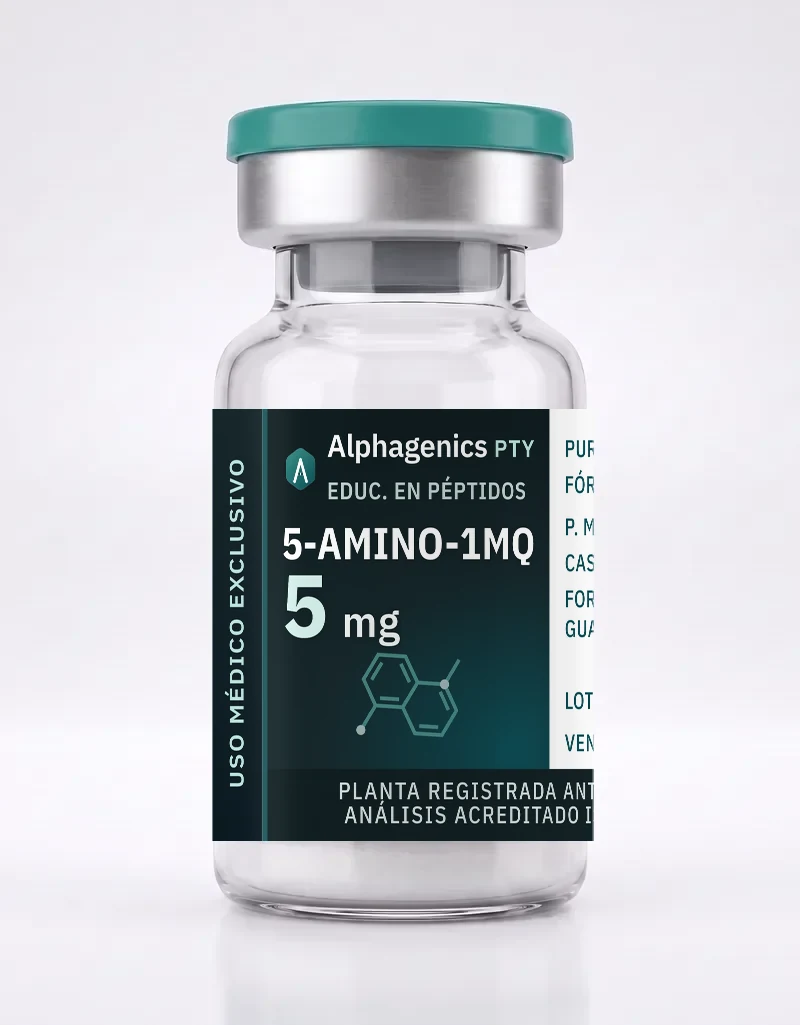
5-Amino-1MQ
5-amino-1-methylquinolinium · NNMTi
Small-molecule inhibitor of nicotinamide N-methyltransferase (NNMT)
About 5-Amino-1MQ
5-Amino-1MQ is not a peptide but a small molecule from the methylquinolinium family that selectively inhibits the enzyme nicotinamide N-methyltransferase (NNMT).
NNMT is abundantly expressed in adipose tissue and the liver, and its activity consumes nicotinamide and S-adenosylmethionine. In animal models, its inhibition has been associated with increased intracellular NAD⁺ levels and with changes in adipocyte energy metabolism. It is usually supplied as the iodide salt.
Quick guide · 5 key points
5-Amino-1MQ and fat metabolism
5-Amino-1MQ is not a peptide: it is a small molecule that blocks the enzyme NNMT, which is abundant in fat and liver. Here are five things the research shows.
-
1
It blocks an enzyme that uses up NAD⁺ precursors
NNMT methylates nicotinamide, an NAD⁺ precursor, using S-adenosylmethionine (SAM). In cultured fat cells, inhibitors from the 5-Amino-1MQ family have been shown to raise intracellular NAD⁺ and SAM and reduce fat formation, without inhibiting related enzymes.1,2
NNMTThe target enzyme: nicotinamide N-methyltransferase -
2
NNMT is raised in obesity
In obese and diabetic mice, NNMT is raised in fat and liver, and lowering it protected against obesity through higher energy expenditure. In people with type 2 diabetes, NNMT expression in fat was about twice as high, and it was associated with insulin resistance.2,3
≈ 2×NNMT in the fat of people with type 2 diabetes -
3
Less weight and fat in obese mice
In mice with diet-induced obesity, 5-Amino-1MQ once a day for 28 days was associated with less weight and fat gain, better glucose tolerance and insulin sensitivity, and less fatty liver. In an earlier study, food intake did not change.4,1
28 daysof daily treatment in obese mice in this study -
4
Regeneration of aged muscle
In 24-month-old mice with a muscle injury, an NNMT inhibitor from the same group was associated with more muscle stem cell activation, fibers almost 2 times larger, and ≈ 70% higher peak muscle force than in controls.5
≈ 70%higher peak force of the injured muscle in old mice -
5
Only cell and animal data so far
All the published evidence is preclinical: no human trials have been published and there is no established half-life in people. In mice, it reached fat, muscle and liver after a subcutaneous injection. Most studies come from one research group linked to its development.4,1,5,6
PreclinicalEvidence level: studies in cells and mice
References
- Neelakantan H, et al. Selective and membrane-permeable small molecule inhibitors of nicotinamide N-methyltransferase reverse high fat diet-induced obesity in mice. Biochem Pharmacol. 2018;147:141-152. PMID 29155147
- Kraus D, et al. Nicotinamide N-methyltransferase knockdown protects against diet-induced obesity. Nature. 2014;508(7495):258-62. PMID 24717514
- Kannt A, et al. Association of nicotinamide-N-methyltransferase mRNA expression in human adipose tissue and the plasma concentration of its product, 1-methylnicotinamide, with insulin resistance. Diabetologia. 2015;58(4):799-808. PMID 25596852
- Babula JJ, et al. Nicotinamide N-methyltransferase inhibition mitigates obesity-related metabolic dysfunction. Diabetes Obes Metab. 2024;26(11):5272-5282. PMID 39161060
- Neelakantan H, et al. Small molecule nicotinamide N-methyltransferase inhibitor activates senescent muscle stem cells and improves regenerative capacity of aged skeletal muscle. Biochem Pharmacol. 2019;163:481-492. PMID 30753815
- Sampson CM, et al. Combined nicotinamide N-methyltransferase inhibition and reduced-calorie diet normalizes body composition and enhances metabolic benefits in obese mice. Sci Rep. 2021;11(1):5637. PMID 33707534
Structure and sequence
Small non-peptide molecule. 2D structure from its canonical SMILES in PubChem.

Five findings from studies
Summary of results reported in the scientific literature. Each finding describes what was observed in the cited study, in its specific population and conditions; it does not constitute a therapeutic indication.
-
Preclinical
In mice with diet-induced obesity, 5-amino-1MQ has shown a reduction in body weight and in white adipose tissue mass, with smaller adipocyte size and reduced total cholesterol, without changes in food intake.
Neelakantan H et al. Biochem Pharmacol. 2018;147:141-152 · PMID 29155147 -
Preclinical
In target-validation studies, suppression of NNMT in adipose tissue and liver has protected mice against diet-induced obesity.
Kraus D et al. Nature. 2014;508:258-262 · PMID 24717514 -
In vitro
In cultured adipocytes, 5-amino-1MQ has shown an increase in intracellular NAD⁺ and a reduction in lipogenesis.
Neelakantan H et al. Biochem Pharmacol. 2018;147:141-152 · PMID 29155147 -
Preclinical
In aged mice, NNMT inhibition has been associated with greater activation of muscle stem cells and better regeneration after injury.
Neelakantan H et al. Biochem Pharmacol. 2019;163:481-492 · PMID 30753815 -
Preclinical
In obese mice, NNMT inhibition combined with a switch to a lean, reduced-calorie diet has been associated with a normalization of body composition superior to that of diet alone.
Sampson CM et al. Sci Rep. 2021;11:5637 · PMID 33707534